
Organisiert von:


Sitzung
PL02: Nachwuchsplenarvortrag 1
Donnerstag, 28. Mai 2026; 17:00 - 17:30 Uhr in HSZ/0003
Sitzungsleitung: Detlef Kuhl
17:00
Performance-Based Approaches to Tall Building Design under Multiple Hazards
Anastasia Athanasiou (Bauhaus Universität Weimar)
Kurzfassung:
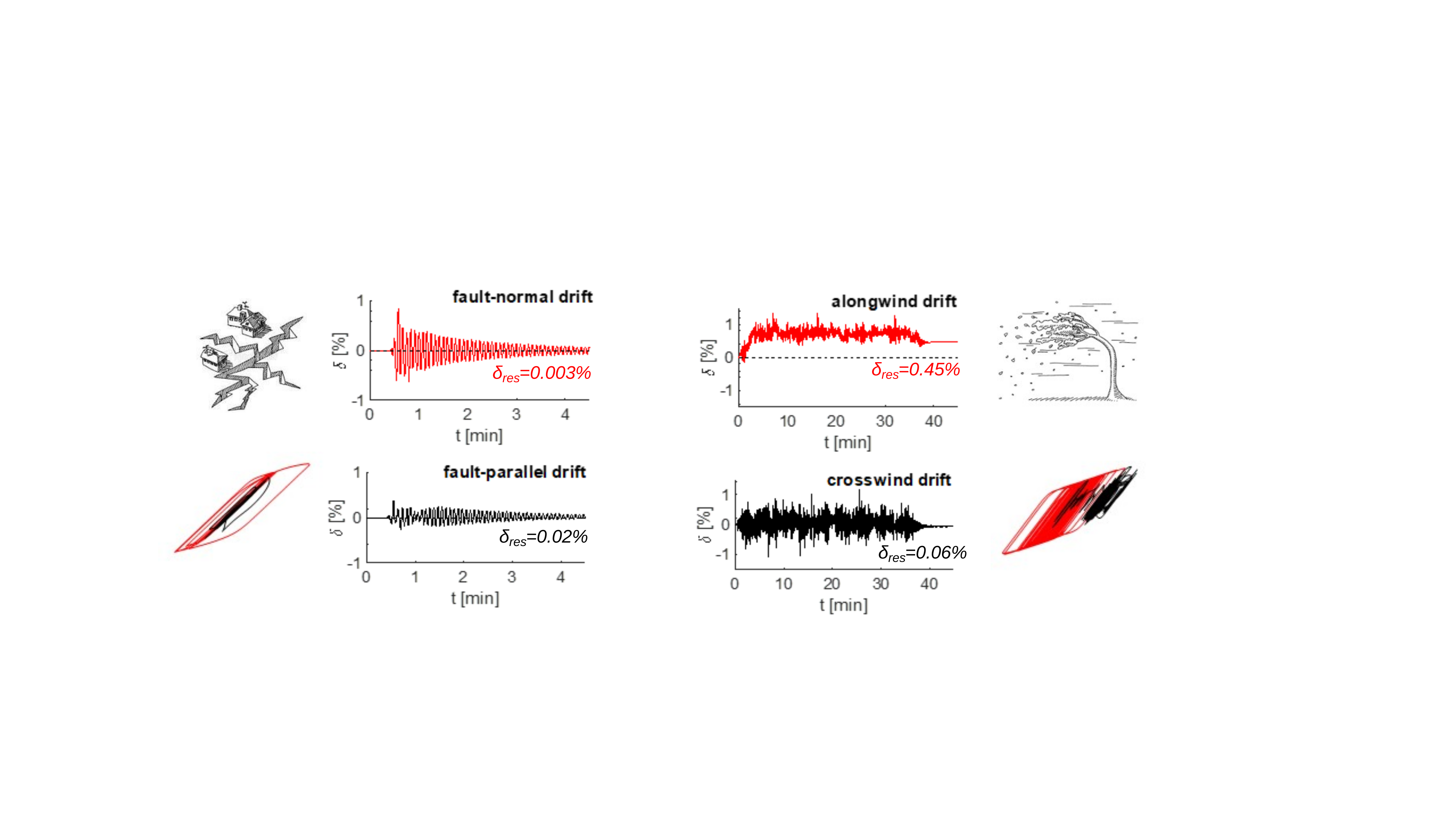
Integrating wind and seismic design is essential for tall buildings in evolving urban areas. Current codes prioritise the dominant hazard, which can result in inaccurate performance predictions in the event of multiple hazards. This study examines the nonlinear dynamic responses of archetype tall buildings (with H-B-D = 5-1-1, and T1= 5s) subjected to recurring earthquakes and winds in both single- and multi-hazard scenarios. Simplified nonlinear models analyse coupled lateral behaviour under biaxial seismic excitation, alongwind and crosswind loads. Nonlinear time history analyses in OpenSees use hazard-consistent, realistic representations of seismic and wind loads to capture responses up to collapse. A parametric study investigates the effects of yielding, hardening and hysteretic degradation on displacement, ductility and energy dissipation. Fragility analyses under single- and multi-hazard scenarios reveal the distinct probabilities of various seismic and wind damage states being exceeded, differentiating between ductile, semi-ductile and non-ductile designs. The results demonstrate the effectiveness of limited ductility design strategies for wind loads, aligning with recent performance-based wind design provisions while maintaining consistency with seismic ductility requirements.
Performance-Based Approaches to Tall Building Design under Multiple Hazards
Anastasia Athanasiou (Bauhaus Universität Weimar)
Kurzfassung:
Integrating wind and seismic design is essential for tall buildings in evolving urban areas. Current codes prioritise the dominant hazard, which can result in inaccurate performance predictions in the event of multiple hazards. This study examines the nonlinear dynamic responses of archetype tall buildings (with H-B-D = 5-1-1, and T1= 5s) subjected to recurring earthquakes and winds in both single- and multi-hazard scenarios. Simplified nonlinear models analyse coupled lateral behaviour under biaxial seismic excitation, alongwind and crosswind loads. Nonlinear time history analyses in OpenSees use hazard-consistent, realistic representations of seismic and wind loads to capture responses up to collapse. A parametric study investigates the effects of yielding, hardening and hysteretic degradation on displacement, ductility and energy dissipation. Fragility analyses under single- and multi-hazard scenarios reveal the distinct probabilities of various seismic and wind damage states being exceeded, differentiating between ductile, semi-ductile and non-ductile designs. The results demonstrate the effectiveness of limited ductility design strategies for wind loads, aligning with recent performance-based wind design provisions while maintaining consistency with seismic ductility requirements.